Interested in MedBug?Register interest
Research-stage sleep technology

Sleep,
translated.

A multi-sensor research and analysis platform designed to turn overnight physiological signals into structured sleep, breathing and recovery insights.

Built for research and clinical investigation. Not a medical device.

Flinders University · FHMRI Sleep Health · South Australia

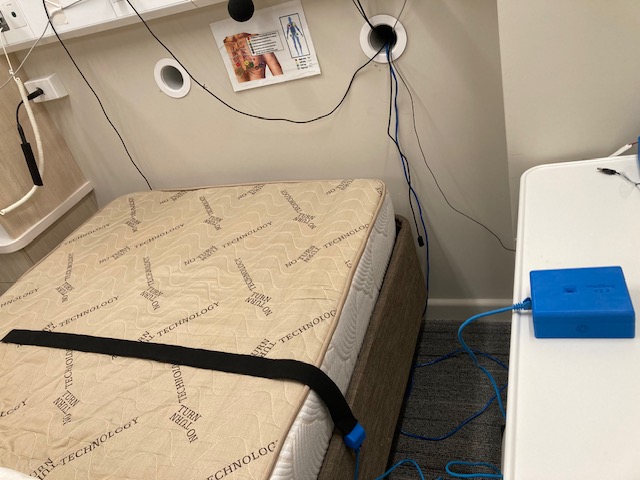
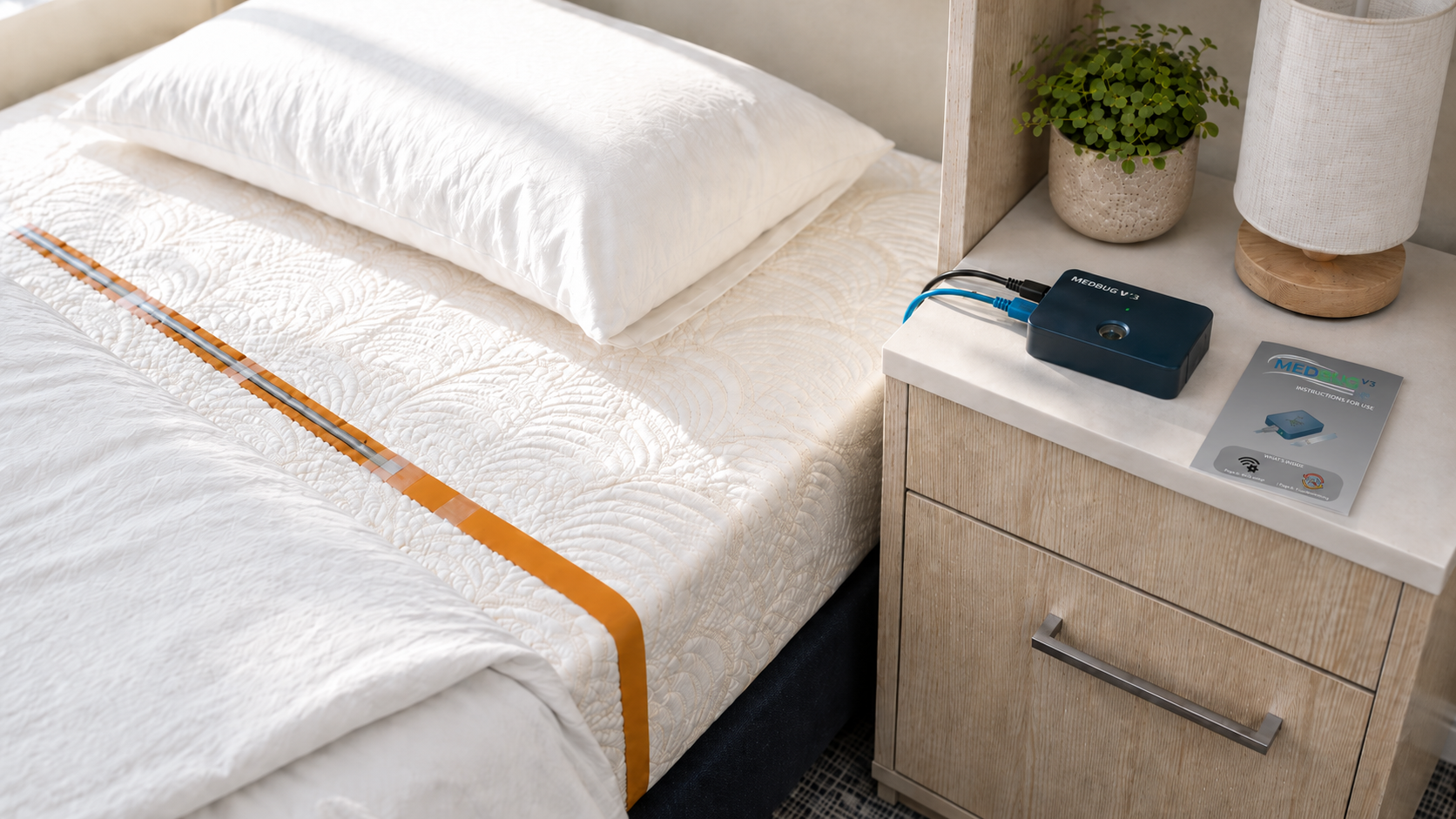
MedBug V3 on a bedside table connected to a mattress sensor strip in a home bedroom
MedBug V3 · Mattress-based sensing
RESPIRATIONContinuous
SLEEP STAGES5-stage analysis

Developed through multidisciplinary sleep research

Multi-sensor capture Signal intelligence Research reporting

The platform

One night.
A richer picture.

MedBug SENSE brings sensing, machine-learning inference and research reporting into one connected workflow—designed to reduce friction without losing signal depth.

01
Sleep architectureIllustrative view
WakeREMN1N2N3
10 PM12 AM2 AM4 AM6 AM

Sleep architecture

Five-stage analysis across Wake, N1, N2, N3 and REM in 30-second epochs.
02
Overnight signal

Breathing events

Structured respiratory-event predictions and overnight pattern summaries.

03

Research-ready reports

Reproducible plots, summaries, exports and PDF reporting for each study run.

01

Vital signs

Heart-rate and respiratory-rate profiles derived from overnight piezo signals.

02

Snore acoustics

Audio-feature workflows support snore-event and overnight acoustic investigation.

03

Arousals

Separate predictions for respiratory and other arousal events within sleep periods.

04

Bed state

In-bed filtering focuses downstream analysis on relevant overnight periods.

05

Ventilation & drive

Research outputs include ventilation burden and respiratory-drive patterns.

06

Context sensing

Temperature, environmental and light-sensing inputs support richer study context.

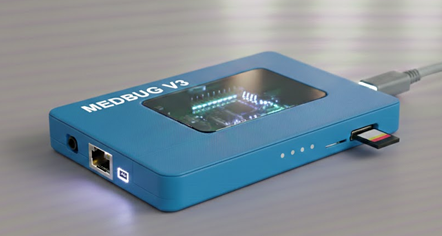
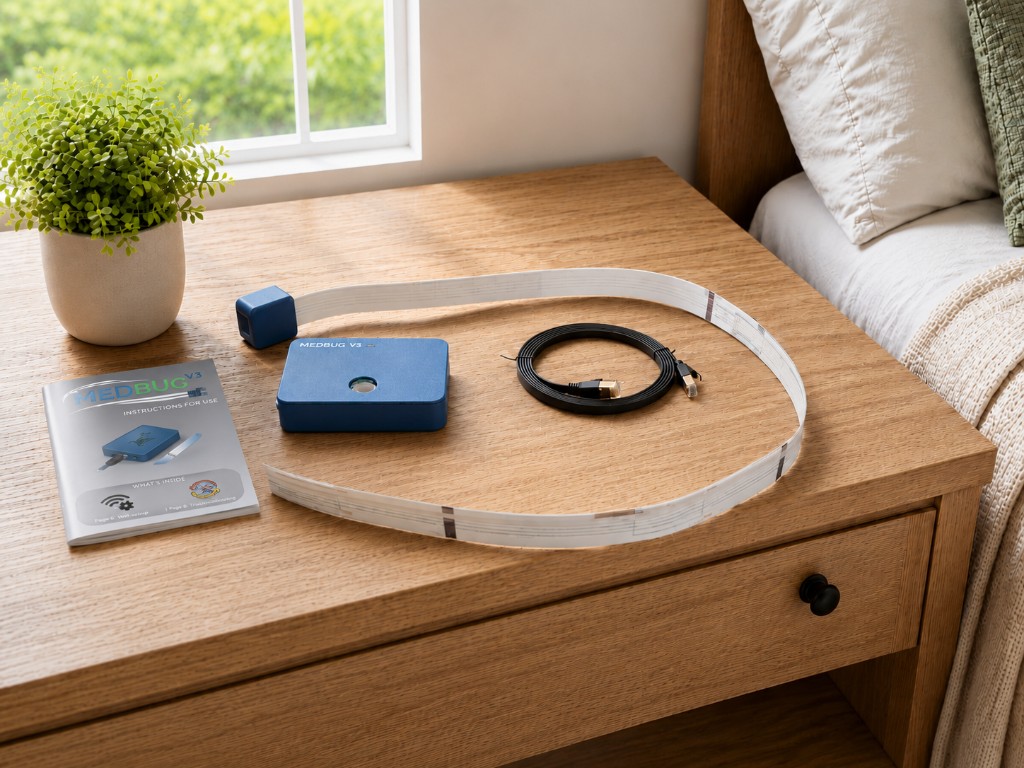
MedBug V3 kit with sensor strip, connector cable and instructions on a bedside table MedBug V3 kit

The research prototype

Unobtrusive by design.
Detailed by intent.

A mattress-based sensing approach brings physiological, acoustic and contextual signals together for multi-night sleep research in laboratory and home settings.

Mattress-based Multi-night Cloud-connected workflow
Prototype shown. Final specifications, availability and regulatory status are not yet published.

The science

Designed around the signal—not the screen.

MedBug’s modular analysis workflow moves from overnight sensing to quality control, model inference and human-readable reporting with a traceable run history.

Discuss a research study
01

Multi-sensor overnight capture

Piezo, acoustic, temperature and environmental signals create a richer research input.

+
02

Multi-model inference

Separate workflows support sleep stage, arousal and respiratory-event analysis.

+
03

Quality and data lineage

Configuration, manifests and run-level outputs make analysis easier to trace and reproduce.

+
04

Flexible research outputs

Structured CSV, JSON, plots and compiled reports support different study needs.

+
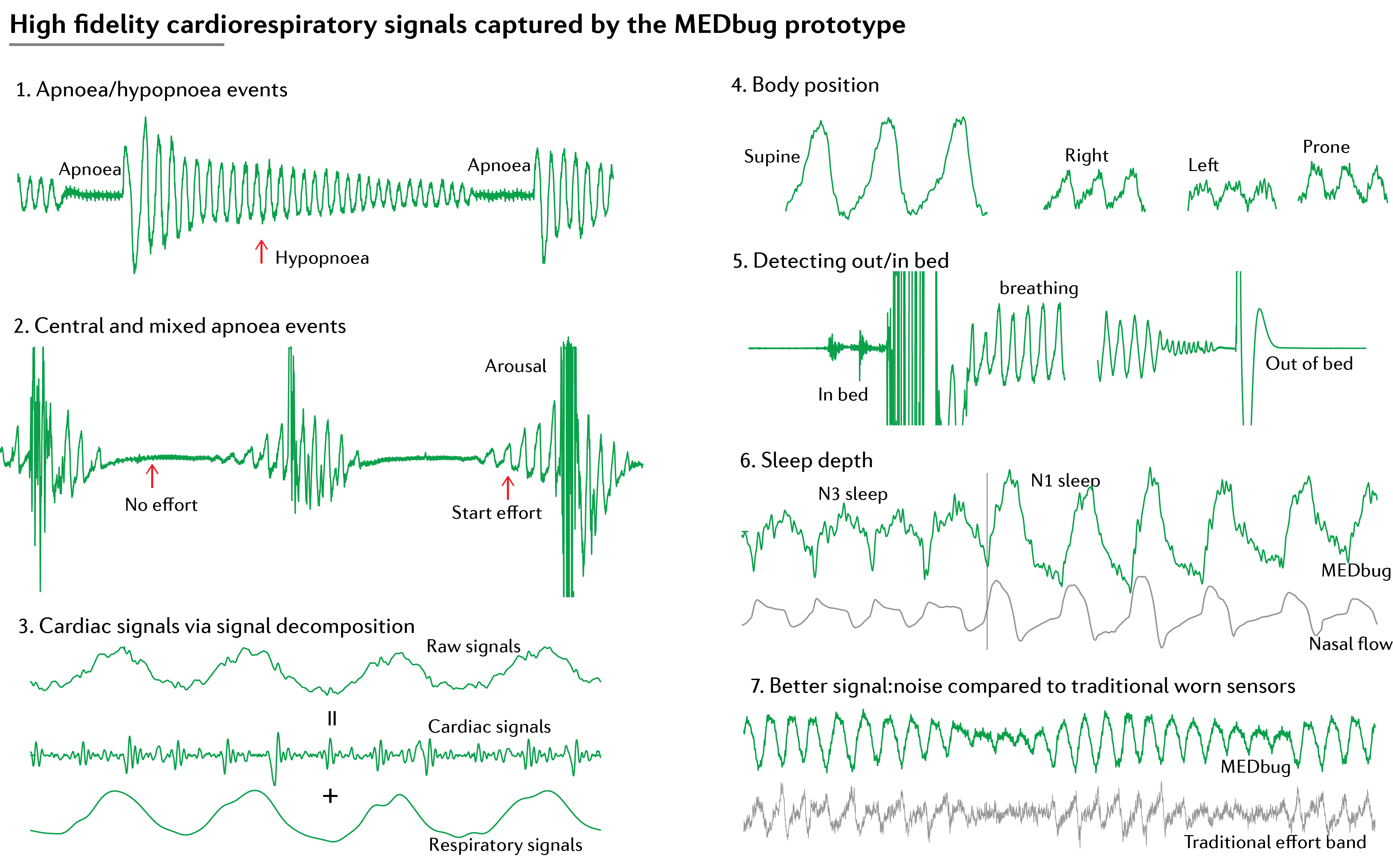
Examples of cardiorespiratory signals captured by the MedBug prototype across apnoea events, cardiac decomposition, body position, bed state and sleep depth
Illustrative research outputs from MedBug prototype signal analysis. Not for clinical diagnosis.
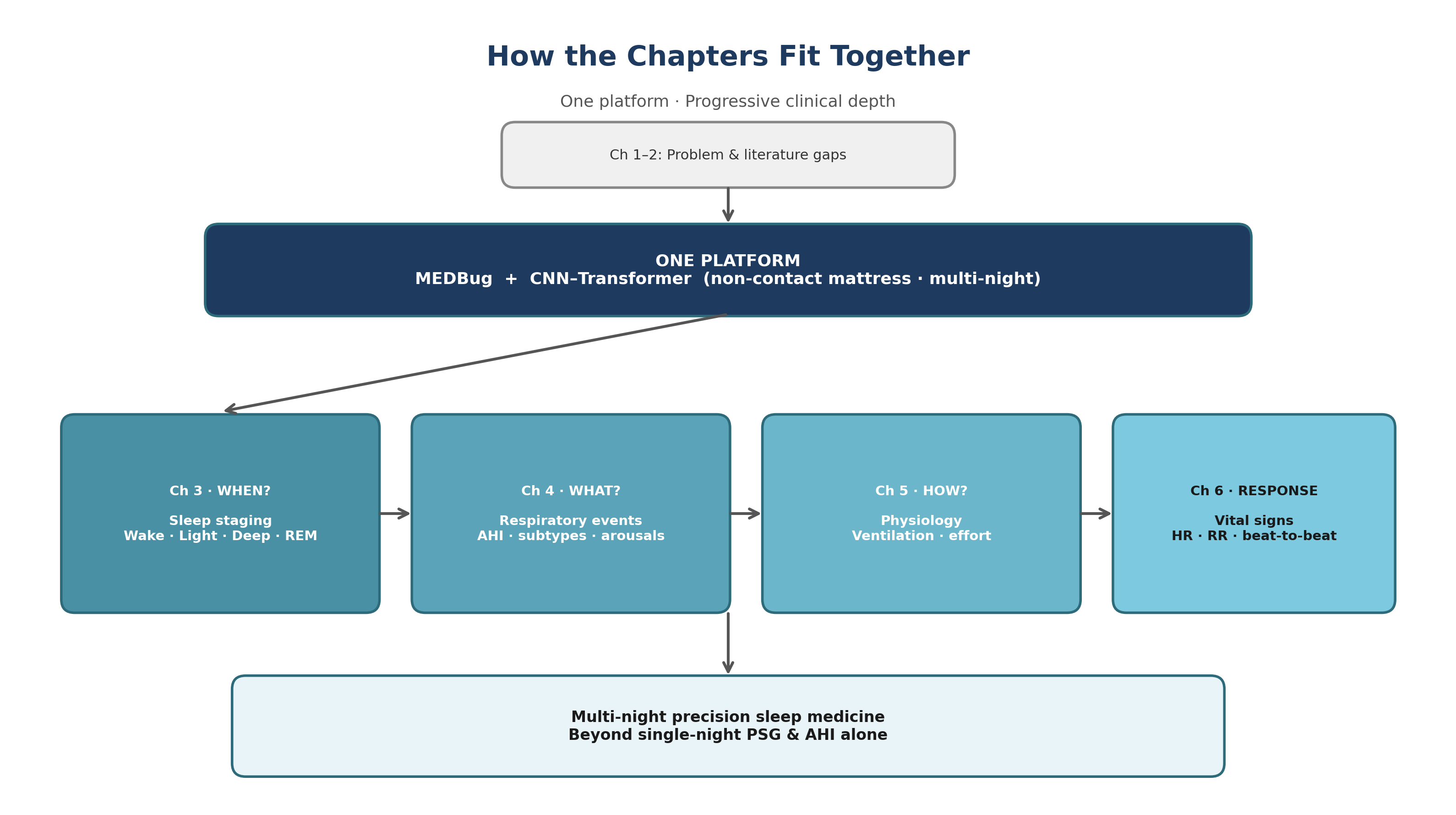
Diagram showing how MedBug research chapters connect from sleep staging through respiratory events, physiology and vital signs toward multi-night precision sleep medicine
One platform with progressive clinical depth — from overnight staging to respiratory physiology and vital-sign response.

Research & development team

Built across disciplines.

MedBug brings together sleep science, clinical research, engineering and machine learning through a multidisciplinary Flinders University collaboration.

PC
Chief Scientist

Peter Catcheside

Sleep and breathing physiology, clinical interpretation and multidisciplinary research leadership.

01
PN
Chief Engineer

Duc Phuc Nguyen

Machine-learning workflows, research engineering and integrated sleep-analysis systems.

02
CN
Lead Algorithm Engineer

Thi Cham Nguyen

Research across sleep-stage analysis, sensor validation and translation into multi-night studies.

03

Collaborating investigators

Contributors identified across MedBug research and conference materials.

Andrew Vakulin Bastien Lechat Jack Manners Alison Teare Karen Reynolds Danny J. Eckert

How it works

From bedside to insight.

A connected research workflow built around repeatability.

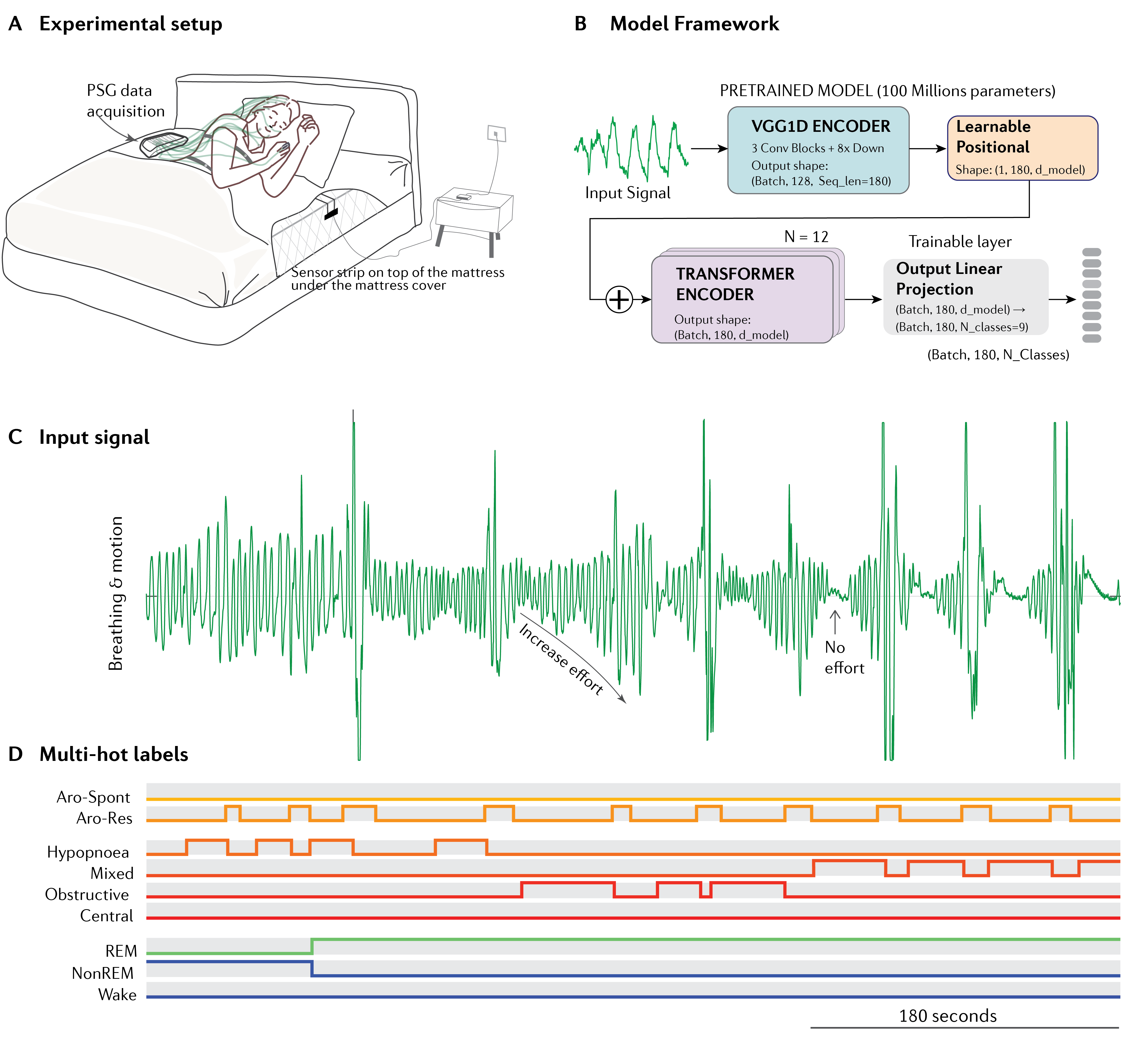
MedBug research workflow showing bedside sensor setup, VGG1D and Transformer model architecture, input breathing signal and multi-label overnight outputs
From mattress-based sensing to multi-label overnight inference — study setup and model pipeline used in MedBug research.
01

Place

Set up the MedBug SENSE unit according to the study protocol and begin the configured period.

02

Sense

Capture continuous overnight signals for configured, research-led analysis.

03

Translate

Process signals through quality checks and models into structured outputs.

04

Understand

Review study-level plots, tables and reports while retaining data lineage.

Pipeline complete RUN / 04
INPUTOvernight signal
ANALYSISMulti-model
OUTPUTReport ready
30 sec epochs 5 sleep stages

Built for collaboration

Research is a team sport.

MedBug is being shaped for researchers, clinicians and partners exploring how multi-sensor overnight analysis can support better sleep investigation.

Research developed within Flinders University sleep-health and medical-device programs in South Australia.

01

Sleep researchers studying sleep architecture, breathing and longitudinal patterns.

02

Clinical collaborators evaluating new approaches to at-home investigation.

03

Technology partners interested in sensing, analysis or translation pathways.

Register your interest

Help shape what comes next.

Tell us where you see a fit. We’ll use your response to understand interest in future research, collaboration and product updates.

  • Early research and pilot conversations
  • Product development updates
  • Collaboration opportunities

No clinical advice or diagnosis is provided through this form.

Interest form About 2 minutes
I am a

Our team usually responds within 2–3 business days. Your information will be used only to respond to this enquiry.

Interest registered

Thank you.

Your response has been received. The MedBug research team can now follow up with you.

Privacy note

Registration details are collected to respond to project enquiries and collaboration interest. Before public release, the approved policy will state the data controller, retention period, access rights and contact process in full.

Research disclaimer

MedBug outputs are generated from sensor data and machine-learning predictions for research and clinical review. They are not a substitute for attended polysomnography or independent clinical judgement. The platform is research-stage and is not marketed as a medical device.